What are flexi time settlement periods and calendars?
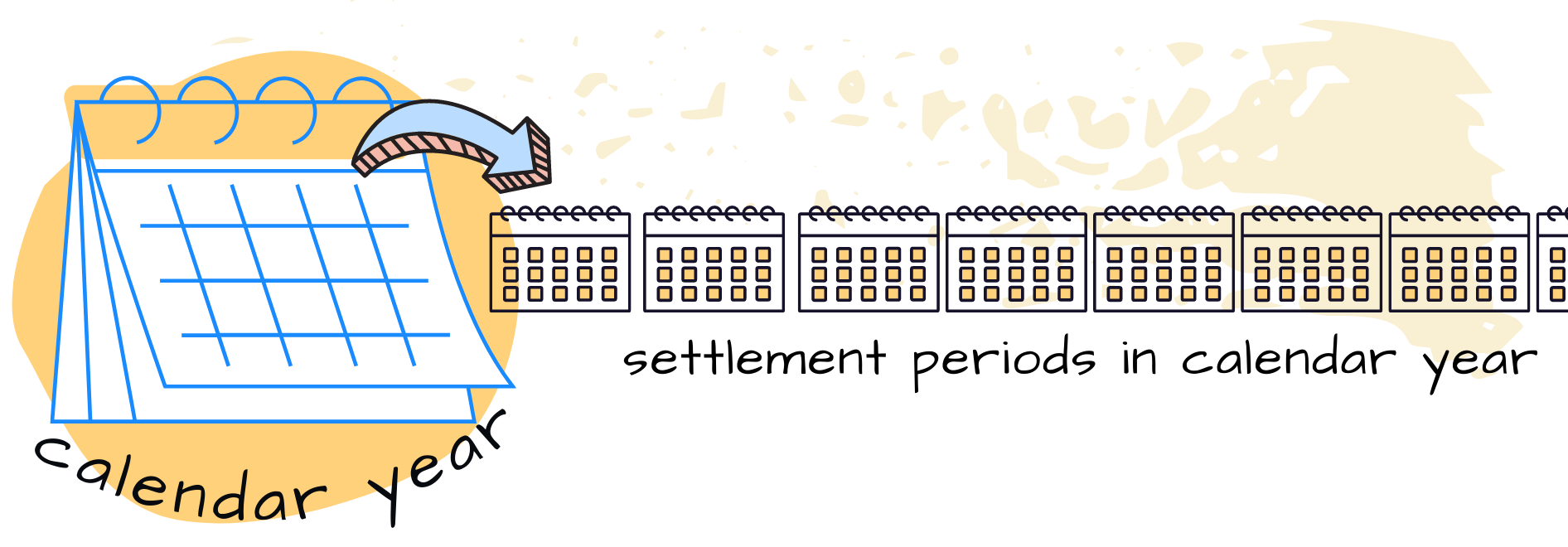
By default, a typical settlement period spans four weeks and a calendar year spans 13 settlement periods.
The other factor is the flexi time code associated with the calendar.
 |
Settlement periods of different lengths (that is, other than four weeks) can be created to suit your organisation's needs. |
Your organisation's flexi time super user:
- sets up flexi time codes, settlement periods, and calendars for your organisation
- can open, close, and delete a settlement period
How do settlement periods affect flexi timesheets?
Settlement periods affect flexi timesheet reporting in the following ways. Employees:
- can create a flexi timesheet for the current (open) settlement period (say, October) and, at the same time, create another flexi timesheet for the next open settlement period (November).
- can create a flexi timesheet for any amount of open settlement periods, however, they can’t skip a settlement period. They can only create them in sequential date order. For example, if an employee creates an October timesheet, they can’t skip November to create a timesheet for December (even if the December settlement period is open).
- can’t submit flexi timesheets for approval out of order. They must submit the earlier one for approval first (say, October) before they can submit their November timesheet.
- can't create a flexi timesheet for a settlement period once the period is closed.
| What if an employee is away for a lengthy period? | If a settlement period closes while an employee is away, they can ask a flexi time super user to create a timesheet for that period on their behalf. Then the employee can complete and submit that timesheet in the usual way/ |
To learn more, see:
© 2023 Fusion5. All rights reserved.